
Writesonic is an AI content and SEO platform for marketing teams, tracking how a brand appears in ChatGPT and Google AI Overviews and fixing what it finds.
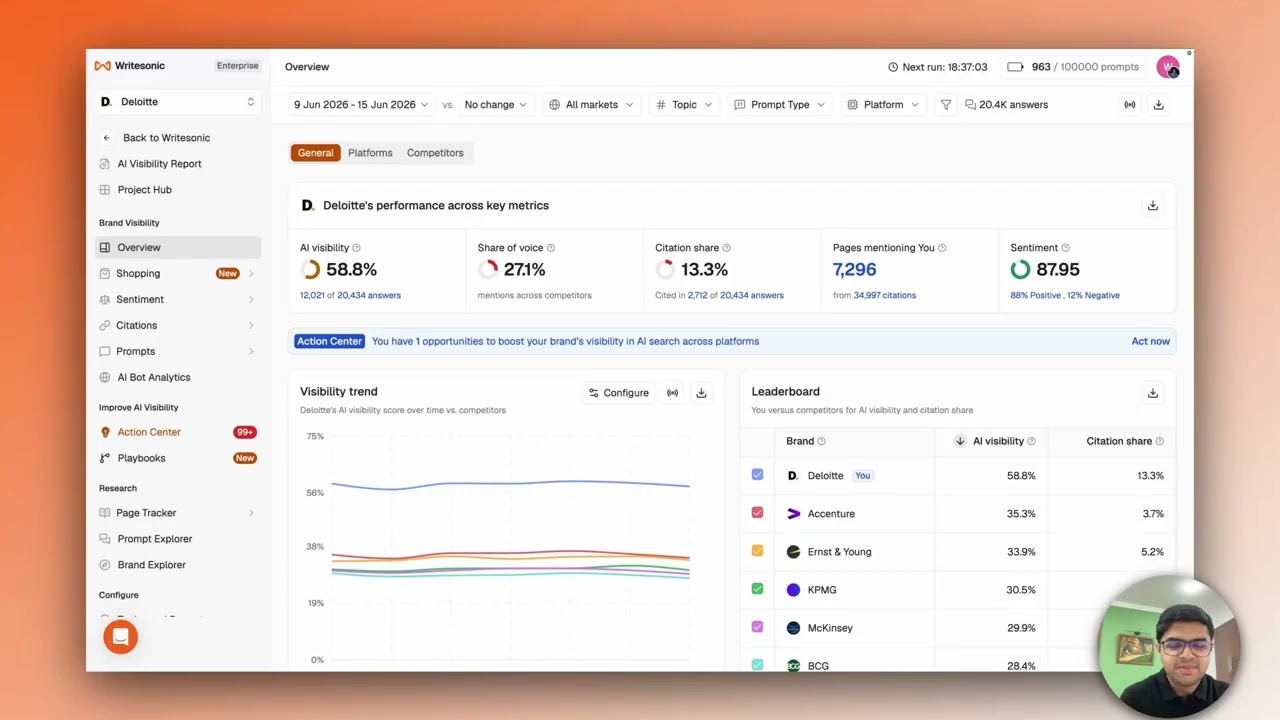
Writesonic is an AI content and SEO platform that shows what ChatGPT, Gemini and Google AI Overviews say about a brand, and then helps teams change it. AI Visibility Monitoring tracks a chosen set of prompts and their answers every day, records which sources the models cite, and turns the gaps into work the platform can carry out. Everything runs on one account at app.writesonic.com, bought as a single subscription. Writesonic is independent, founded in 2016 and based in San Francisco. The platform starts with prompt targets, where a team picks the questions to track by persona, intent, market and locality, and sets the split between branded and non-branded prompts. Ads monitoring and Sentiment Analysis sit beside the citation data, and the Action Center turns findings into on-page and off-page fixes. AI Article Writer researches keywords and SERPs, then drafts long-form articles with hero and section images generated in the editor. Site Audit crawls pages for AI search and SEO problems, and Agentic Workflows run those tasks without a person starting each one. Chatsonic is the chat mode of the same account, with a Chrome extension for drafting elsewhere on the web and an API for teams building on top of it. Writesonic suits marketing and SEO teams whose pipeline now depends on being cited in AI answers as well as on ranking. It fits in-house content teams at software companies, agencies reporting visibility to several client brands, and PR teams that need sentiment as well as mentions. Brand voice styles, approval workflows and multi-brand governance are there for organisations keeping more than one brand or market consistent. It is bought as one platform subscription per account, with prompts tracked, articles, audits, seats and projects all set by the tier, and the plan cards list every tier and what it includes. Day to day, teams use it to watch citation share against competitors, find the pages the answer engines ignore, and publish the replacements. Finished drafts go to WordPress, Sanity, Contentful, Contentstack or Drupal, so the platform sits between a keyword list and a live CMS. Google Search Console, GA4, Google Keyword Planner and Looker Studio connect for reporting, which puts AI referral traffic beside organic search in the tools a team already uses. The routine it replaces is prompting the assistants by hand, pasting the answers into a spreadsheet and guessing which page to rewrite next.
Features
Additional Features
Best for
- Marketing teams tracking brand mentions in ChatGPT and Gemini answers
- SEO teams adding generative engine work to existing rankings work
- Agencies reporting AI visibility to several client brands
- In-house content teams publishing long-form articles to a CMS
- B2B software marketers measuring AI citations against competitors
- PR and comms teams watching sentiment in AI answers
- Teams that can work within one to three seats below Enterprise
- Companies tracking one or two brand projects at a time
Use cases
- Tracking how often a brand is cited in ChatGPT answers
- Comparing AI search share of voice against competitors
- Building prompt sets by persona, intent and locality
- Watching sentiment change in AI-generated answers
- Auditing a site for AI search and SEO problems
- Drafting long-form SEO articles from a keyword
- Publishing finished drafts straight to WordPress
- Localising articles into other languages
- Measuring AI referral traffic in GA4 and Looker Studio
- Reporting AI visibility to clients in Looker Studio
- Generating social captions for a campaign launch
- Wiring content generation into an internal tool through the API
Screenshots & Videos
Explore Writesonic in action
User Reviews
0 reviews from verified users
Compare with Similar Software
Click to compare side by side with Writesonic


